
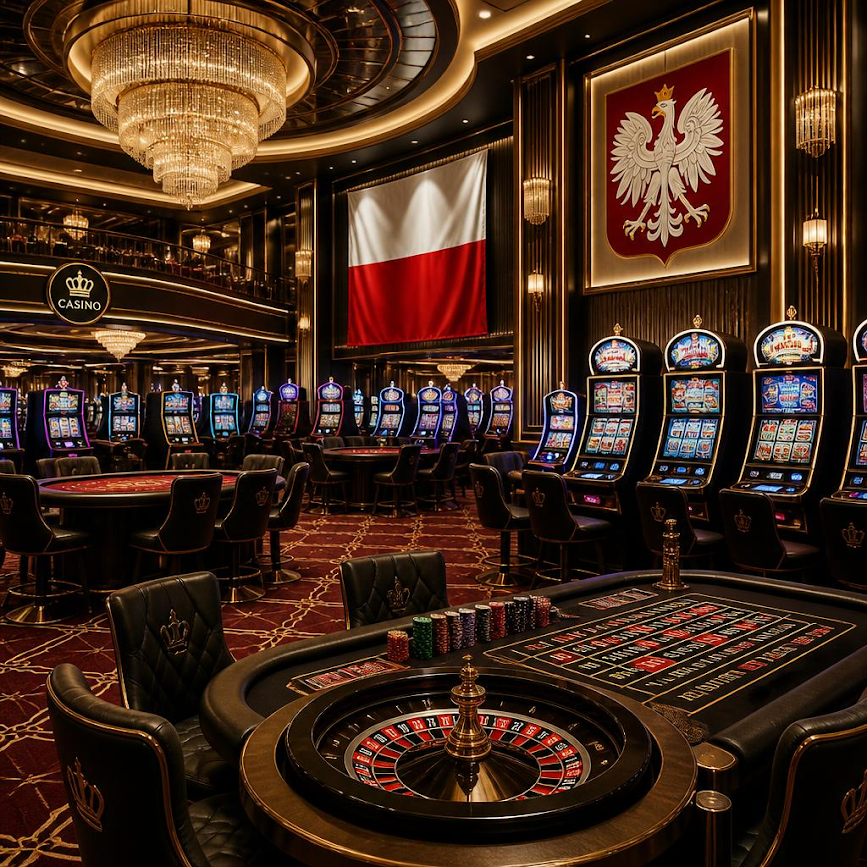
Poland remains one of the most unusual gambling jurisdictions in Europe. While most European Union countries have gradually opened their markets to licensed private operators, Polish authorities chose a different path — establishing a state monopoly in the online casino sector.
The situation has been closely analysed by specialists at Rollingslots Сasino, as the Polish market has long been considered an interesting example of an alternative approach to gambling regulation. At the centre of this model is the state-run operator Total Casino, which operates through Totalizator Sportowy.
The foundation of the system is a state monopoly. The government gains full control over the online casino segment, financial flows, advertising activities and player protection measures. This model was adopted following a major legislative reform aimed at reducing the influence of unlicensed operators and increasing market transparency.
The primary argument in favour of the monopoly remains gambling regulation. With only one operator, it becomes significantly easier for the government to oversee compliance, implement responsible gambling measures and monitor financial transactions.
Public revenue is equally important. Income generated by the state operator remains within the national economy and is used to fund sport, culture and various public projects. For this reason, supporters of the current model view the monopoly not only as a regulatory tool but also as a source of stable budget revenue.
However, the development of the European market is gradually increasing pressure on Poland’s system. In most EU countries, players can choose from dozens of licensed brands, while the Polish model offers only a single official online casino operator.
According to European industry analysts, the online segment remains the fastest-growing area of the gambling industry. As a result, questions regarding the effectiveness of the monopoly model are becoming increasingly relevant.
Table: Key Characteristics of the Polish Model
| Indicator | Value |
| Country | Poland |
| Market Model | State monopoly |
| Operator | Total Casino |
| Ownership | Government-owned |
| Main Objective | Market control |
| Additional Objective | Growth of public revenue |
| Segment | Online casino |
| Status | Active model |
Why This System Was Chosen
- centralised market control;
- simplified financial monitoring;
- combating illegal operators;
- greater industry transparency;
- stronger user protection;
- retention of revenue within the state system.
How the Polish Online Casino System Operates Today
The modern structure of Poland’s online casino market revolves around a single participant. Unlike most European countries, there is no competition between multiple licensed online casinos.
The central role belongs to the state-owned operator Total Casino. The company holds the exclusive right to provide online casino services within Poland and is effectively the sole representative of the legal gambling sector in this category.
The operator licence framework is particularly significant. In most countries, licences are granted to multiple companies, whereas the Polish model permits only one official online casino operator.
For the regulated market, this structure provides a very high level of oversight. The government is able to monitor virtually every major process within the industry.
From the perspective of the gaming industry, this system remains unique among large European markets. This is why Poland is frequently featured in international studies as a distinct example of gambling regulation.
Table: Features of the Current Model
| Parameter | Value |
| Online casino | State monopoly |
| Number of operators | One |
| Market control | Maximum |
| Competition | Limited |
| Regulation | Centralised |
| Payment monitoring | Government-controlled |
| Player protection | Centralised |
Why International Operators Continue Competing for Polish Players
Despite the existence of a state monopoly, Poland remains an attractive market for international companies. The reason is simple: demand for gambling products continues to grow, while the internet removes many geographical barriers.
International operators are particularly active. These brands operate across multiple European markets, possess extensive experience, substantial marketing budgets and access to thousands of gaming products.
Consumer choice is an important factor for many players. Under the state monopoly model, users have access to only one licensed casino. International platforms offer dozens of alternatives, hundreds of providers and thousands of slot games.
Market competition also has a major influence. In countries with open licensing systems, companies continuously improve services, develop mobile applications, introduce new features and expand their game portfolios.
Bonus programs remain another important acquisition tool. This is why offers such as the Rolling Slots bonus have become part of the competitive battle for player attention.
Offshore platforms also continue to play a significant role. Some international brands actively target Polish users despite not holding a local licence. Players are attracted by wider game selections, more payment methods and more flexible promotional conditions.
Industry experts note that international competition represents the greatest challenge facing Poland’s monopoly model. The state operator is not competing with a single company but effectively with the entire European market.
What Advantages Does the State Monopoly Provide?
Supporters of the current system argue that the state monopoly delivers a higher level of control and security than fully liberalised market models.
The main advantage remains player protection. The state operator must comply with unified standards for security, data protection and responsible gambling.
Public revenue is another major benefit. Income generated by the online casino remains within the state system and can be directed towards public projects.
Responsible gambling also plays an important role. A centralised model allows self-exclusion tools, deposit limits and player activity monitoring systems to be implemented more quickly.
Under the current gambling policy, the government is also able to respond rapidly to emerging risks and market changes.
The regulatory framework is particularly important. A single operator significantly simplifies financial oversight, fraud prevention and the monitoring of suspicious transactions.
What Problems Does the Monopoly Model Create?
Despite its advantages, this remains one of the most controversial aspects of the Polish market.
The issue most frequently discussed is market efficiency. The absence of direct competition can reduce incentives for innovation and rapid product development.
The entire gambling ecosystem is affected. International companies invest billions of euros every year in technology, mobile services and new gaming products. The state operator is effectively required to compete against this ecosystem on its own.
Player behaviour also plays a significant role. Modern users are accustomed to comparing platforms and selecting the option that best suits their preferences. When the official market offers limited choice, part of the audience inevitably begins seeking alternatives.
This is where the concept of channelisation rate becomes important.
Channelisation rate refers to the proportion of players who use the licensed market instead of unlicensed operators.
If this figure declines, the effectiveness of the monopoly model begins to come into question. Some European studies suggest that a high level of control does not automatically guarantee a high channelisation rate.
Gambling taxation also has an influence. If part of the audience chooses international platforms, the government loses a portion of potential tax revenue.
The speed of innovation remains another area of debate. In competitive markets, companies are constantly pressured to improve products. In a monopoly environment, this pressure is considerably weaker.
User security receives particular attention. Modern platforms invest heavily in protection technologies from the moment players complete a Rolling Slots login or similar authentication procedure. Maintaining this level of technological advancement requires continuous investment.
Table: Main Drawbacks of the Monopoly Model
| Problem | Potential Impact |
| Limited competition | Reduced innovation |
| Single operator | Restricted choice |
| International competition | Loss of players |
| Slower development | Risk of technological lag |
| Limited game selection | Reduced attractiveness |
| Grey-market pressure | Player migration |
How Other European Countries Approach the Market
Over recent years, many European countries have abandoned monopoly models in favour of licensed competitive markets.
The Netherlands is often cited as one of the most notable examples. Following regulatory reforms, the market was opened to multiple licensed operators, creating a competitive market while maintaining strong regulatory oversight.
Denmark also provides an interesting example, where liberalisation was accompanied by high levels of channelisation and substantial migration of players towards licensed brands.
Germany adopted a middle-ground approach. The country operates a regulated competitive market with strict licensing requirements and strong responsible gambling obligations.
The United Kingdom is widely regarded as one of Europe’s most liberal gambling markets. Nevertheless, high levels of control are maintained through a sophisticated licensing and operator-monitoring system.
In many countries, market liberalisation has resulted in stronger competition, faster innovation and a broader range of products for consumers.
What Poland’s Market Could Look Like in the Coming Years
By 2030, Poland’s gambling market could develop in several different directions.
The first scenario involves maintaining the state monopoly. In this case, the focus would be on modernising Total Casino, developing new technologies and improving the user experience.
The second scenario would involve partial liberalisation. The government could retain strict control while allowing a limited number of additional licensed operators to enter the market.
The third scenario would see a gradual transition towards the model used in many EU countries, where several licensed companies operate under regulatory supervision.
For players, product quality will remain the most important factor. This is why independent resources such as a Rolling Slots review help users compare operators objectively, while genuine player feedback, including Rolling Slots testimonials, continues to become an increasingly valuable source of information.
The online casino segment is also expected to continue growing. European trends indicate that digital products will remain the primary growth driver for the gambling industry.
The most likely scenario appears to be the continuation of the monopoly model in the medium term, combined with ongoing modernisation of the state operator. However, as international competition intensifies, discussions about possible reforms are expected to become increasingly active.
Ultimately, the success of any model will depend not on who owns the operator, but on its ability to provide players with a safe, modern and competitive product. This factor is becoming the primary measure of regulatory effectiveness across Europe’s gambling industry.