
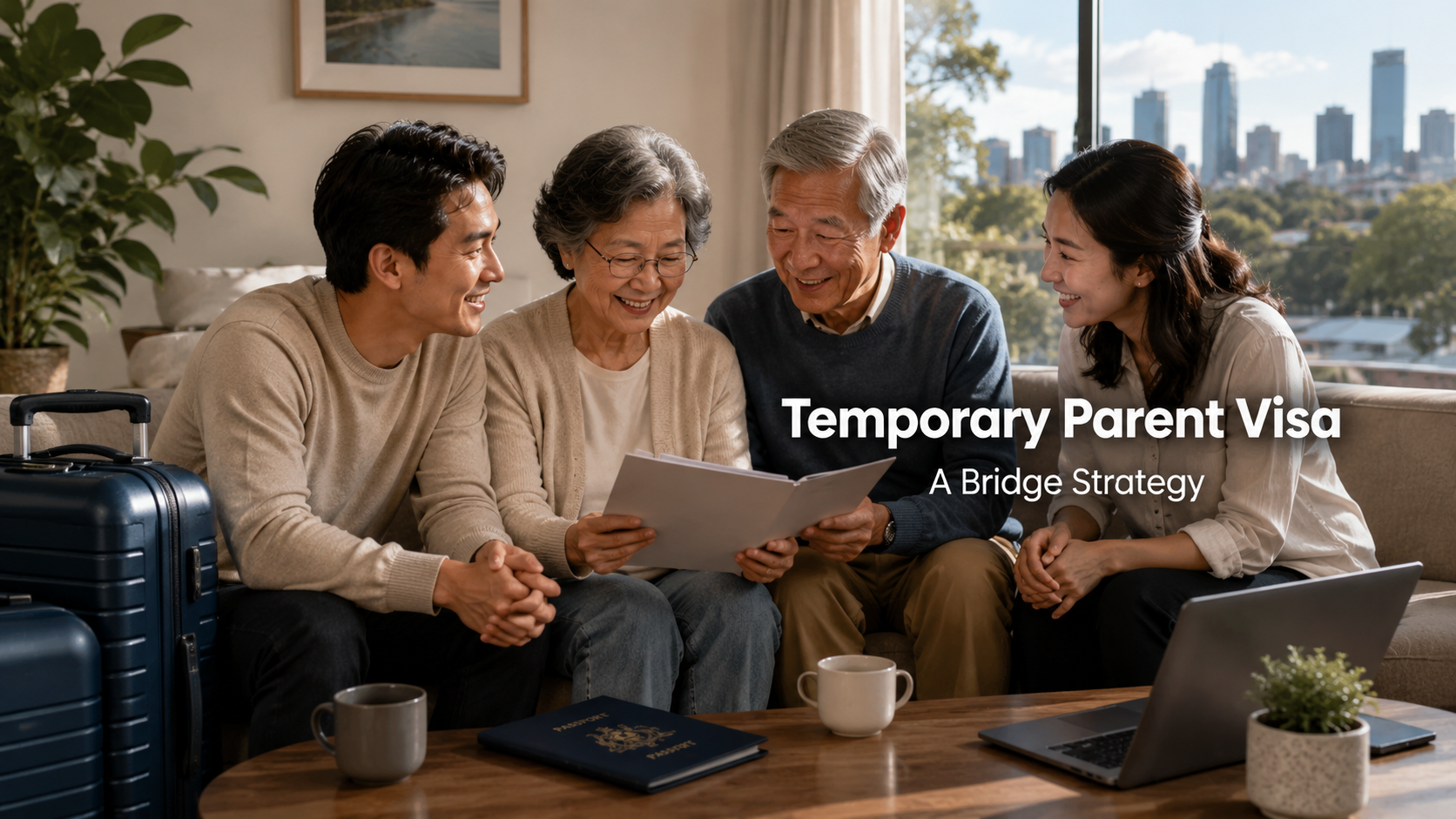
The Temporary Parent Visa is becoming a practical bridge for families who want parents to spend longer periods in Australia while permanent parent visa options remain slow, capped, and costly. It does not give permanent residence, work rights, or a guaranteed path to a permanent parent visa. Still, for many households, it fills a real gap: more time together, better family support, and a chance to plan long-term parent visa Australia options with less pressure.
Why families are rethinking the parent visa plan
Many Australian families start with one simple goal: “We want Mum or Dad here for longer.” The harder part is choosing the right parent visa pathway.
Permanent parent visa options can involve long waiting periods because demand is higher than the number of places available each program year. Current parent visa processing guidance shows contributory parent visa applications are estimated at around 15 years for new applications, while Parent and Aged Parent visas are estimated at around 33 years. Parent visas are also subject to capping and queueing, which means applications can wait until a place becomes available in a future program year.
This is why the subclass 870 Sponsored Parent Temporary visa has become part of many family plans. It lets a parent of an Australian citizen, Australian permanent resident, or eligible New Zealand citizen visit Australia for up to 3 or 5 years.
What the Temporary Parent Visa 870 actually does
The subclass 870 is a temporary visa. It is not a permanent parent visa Australia, and it does not replace permanent parent options such as subclass 103, 143, 804, or 864. Its main value is time.
Families use it to let parents stay in Australia for a longer block than a standard visitor visa may allow. This can mean being present for grandchildren’s early years, helping during pregnancy or recovery, spending retirement time with adult children, or testing how life in Australia may feel before committing to a more expensive or longer-term parent visa plan.
The visa can be granted for 3 or 5 years at a time, with a maximum total stay period of up to 10 years across 870 visas.
Why it works as a bridge strategy
A bridge strategy is not a shortcut. It is a planning tool.
For parent visa Australia planning, the 870 can sit between short visitor stays and permanent parent visa decisions. Families often use it while they compare cost, age rules, health risks, queue times, family commitments overseas, and the sponsor’s capacity to support the parent in Australia.
This is especially useful for families who are not ready to lodge a permanent parent visa, cannot yet meet the balance of family test for certain parent visa streams, or need more time to decide between contributory and non-contributory options.
The 870 also has one major difference from many permanent parent visa options: there is no balance of family test or Assurance of Support requirement for this visa. The balance of family test applies to several other parent visas, including subclass 103, 143, 173, 804, 864, and 884.
Suggested visual: The 870 bridge plan
Parent overseas
↓
Australian child applies as sponsor
↓
Sponsor approval granted
↓
Parent lodges subclass 870 visa application
↓
Parent stays in Australia for 3 or 5 years
↓
Family reviews long-term parent visa options
↓
Second 870 may be possible, up to the 10-year total limit
This visual works well inside a guest blog because it makes a complex parent visa decision easier to scan without reducing the legal detail.
What families are doing in real life
A common case involves new parents in Australia who want grandparents nearby for childcare and emotional support. A short visitor visa may help for a few months, but it may not suit families who need stability across several years. The 870 can offer that longer stay while the family works out school routines, work schedules, and housing.
Another case involves adult children who want to bring an elderly parent closer after the loss of a spouse overseas. The family may not be ready for a permanent parent visa due to cost, health checks, or long-term care planning. The 870 gives them time together while they assess future options.
A third case involves parents who are unsure about living in Australia full time. A permanent parent visa is a major financial and personal decision. A 3-year or 5-year temporary stay can help the parent experience Australian life before the family commits to a permanent parent visa route.
The sponsor step comes first
The 870 process starts with the sponsor. The Australian child must make a sponsorship application and have it approved before the parent can lodge the visa application. The sponsor must include the required documents, and a notice of assessment from the Australian Taxation Office is part of the sponsorship evidence.
This point catches many families off guard. The parent cannot simply apply first and add the child later. The sponsor approval is the gateway step.
After sponsorship approval, timing is important. The parent must lodge the visa application within the allowed period after sponsorship approval, subject to the rules that apply to their situation.
The parent must still show temporary intent
A long stay does not remove the temporary nature of the visa. The applicant must show a genuine intention to stay in Australia temporarily. Evidence may include reasons for the visit, proof of return plans, home ownership or major assets, and strong ties to the home country.
This is where many families need careful document planning. A parent who wants to spend five years in Australia still needs to show the stay is temporary. That can feel contradictory, but it is central to the 870 visa.
Good evidence may include property documents, pension records, close family remaining overseas, community ties, business interests, medical care plans, or written reasons explaining why the parent intends to comply with visa conditions.
Health, character, and funds still count
The 870 visa is temporary, but it is still a formal family visa. Parents may need to meet health and character requirements, and they need to show they can support themselves financially during their stay in Australia.
Families should plan beyond the visa charge. Living costs, health cover, medicines, travel, mobility needs, and housing arrangements can be significant. A parent staying for several years is not a short-term guest; they become part of the household budget.
What the 870 does not do
The subclass 870 is often misunderstood. It does not grant permanent residence. It does not give a parent the right to work in Australia. It does not remove future health, character, age, balance of family, or queue issues linked to permanent parent visa options.
It also does not guarantee that a later permanent parent visa will be granted. A family can use the 870 as a planning bridge, but they still need a separate strategy for permanent stay.
This is why the 870 should be treated as one part of a wider parent visa plan, not the full answer.
How it compares with permanent parent visa options
Permanent parent visas suit families who want long-term settlement. The trade-off is usually time, cost, and stricter rules.
The Parent visa subclass 103 and Aged Parent visa subclass 804 are lower-cost compared with contributory options, but their estimated waiting periods are much longer. Contributory parent visas cost more but are estimated to move faster than non-contributory options, still with a long wait for many applicants.
The 870 sits in a different category. It can provide meaningful time in Australia without waiting for a permanent parent visa place, but the parent remains temporary.
Smart questions families are asking
Before choosing the 870 as a bridge, families are asking:
Can the parent afford several years in Australia without working?
Can the sponsor meet the sponsorship obligations?
Does the parent have strong evidence of temporary intent?
Is the family planning to lodge a permanent parent visa later?
Will the parent need to spend time outside Australia before another 870 application?
Could health changes affect later parent visa options?
These questions help families avoid treating the 870 as a quick fix.
Final thoughts
The Temporary Parent Visa 870 has become popular because it responds to a real family need: parents and adult children want more time together while permanent parent visa pathways remain slow and highly planned.
For many families, it works best as a bridge strategy. It can create years of family time, reduce repeated short-term travel, and give everyone space to decide on a longer-term parent visa pathway. The key is to be clear about its limits. It is temporary, it carries conditions, and it should be planned with the full parent visa Australia pathway in mind.